
Ritchie County Parole and Probation
Parole and probation can both place conditions on a person living outside a jail or prison, but they begin in different ways. The West Virginia Parole Board decides whether an eligible state prisoner may leave confinement before the maximum sentence ends. WVDCR Parole Services then supervises that conditional release. Probation is imposed by a judge as part of a sentence. The West Virginia Judiciary, not the Parole Board, administers it through the Third Judicial Circuit.
That difference determines the right record. A former North Central detainee is not presumed to be on either form of supervision. Bond, dismissal, time served, transfer, and sentence expiration can all end a jail episode without creating parole. The sentencing order may impose probation even when no state prison term followed. For parole, the prison offender history, Board proceeding, and Parole Services office form the best verification chain.
| Question | Parole | Probation |
|---|---|---|
| Who orders it? | West Virginia Parole Board | Sentencing court |
| Who supervises it? | WVDCR Parole Services | West Virginia Judiciary probation staff |
| Best first record | Prison OIS status and Board record | Sentencing or revocation order |
| How it ends | Discharge, expiration, or Board action | Court completion, discharge, or revocation order |
- Parole
- Conditional release from a state sentence before its maximum end.
- Probation
- Court-ordered community supervision imposed in a criminal case.
- Discharge
- The formal end of custody or supervision shown by the responsible agency.
- Absconder
- A person whom a supervising authority alleges failed to remain in contact or comply.
Verify Ritchie County Post-Release Supervision
Begin with the custody path, not a guess based on release. A person who moved from North Central into sentenced WVDCR custody may later qualify for parole. Someone sentenced directly to probation remains in a judicial case. If a name disappears from the regional-jail search, also check the separate prison search because a move into prison is a transfer, not a community release.
- Use the WVDCR offender-search hub. Check the jail system for the North Central episode, then the prison system for a state commitment.
- Read status, institution, sentence, and date labels exactly. A parole eligibility date is only the first date for Board consideration.
- For possible parole, check the Parole Board hearing process, then ask WVDCR Parole Services whether supervision is current and which office is the public contact.
- For possible probation, obtain the sentencing or revocation order from the Ritchie Circuit or Magistrate Clerk. Confirm the order with the probation contact listed by the Judiciary.
- Ask only for public supervision status and the proper office. A private residence, reporting time, or personal schedule is not needed to verify supervision.
The complete released-person search path also appears on the Ritchie County released inmate search. It combines WVDCR data with Ritchie court records so a transfer, release, and supervision start are not collapsed into one event.
Ritchie County Supervision Office Contacts
Ritchie County has no single office for all post-release supervision. Parole is served from Parkersburg. The Third Judicial Circuit has a probation deputy in Harrisville and a chief probation officer in St. Marys. Published office hours were not found, so call before visiting.
Parkersburg Parole Office
225 Holiday Hills Drive, Suite 1
Parkersburg, WV 26104
304-420-4630
Use for WVDCR parole supervision serving Ritchie County and Region 5.
Ritchie Circuit Probation
Danielle K. Stanley, Probation Deputy
109 North Street, Suite 204
Harrisville, WV 26362
304-643-2164 ext. 600
Fax: 304-643-2050
The Third Judicial Circuit probation directory shows the local and chief contacts. This division of work is why the sentencing order should be read before any call.
The official probation directory shows the county-specific path in the live Judiciary source.
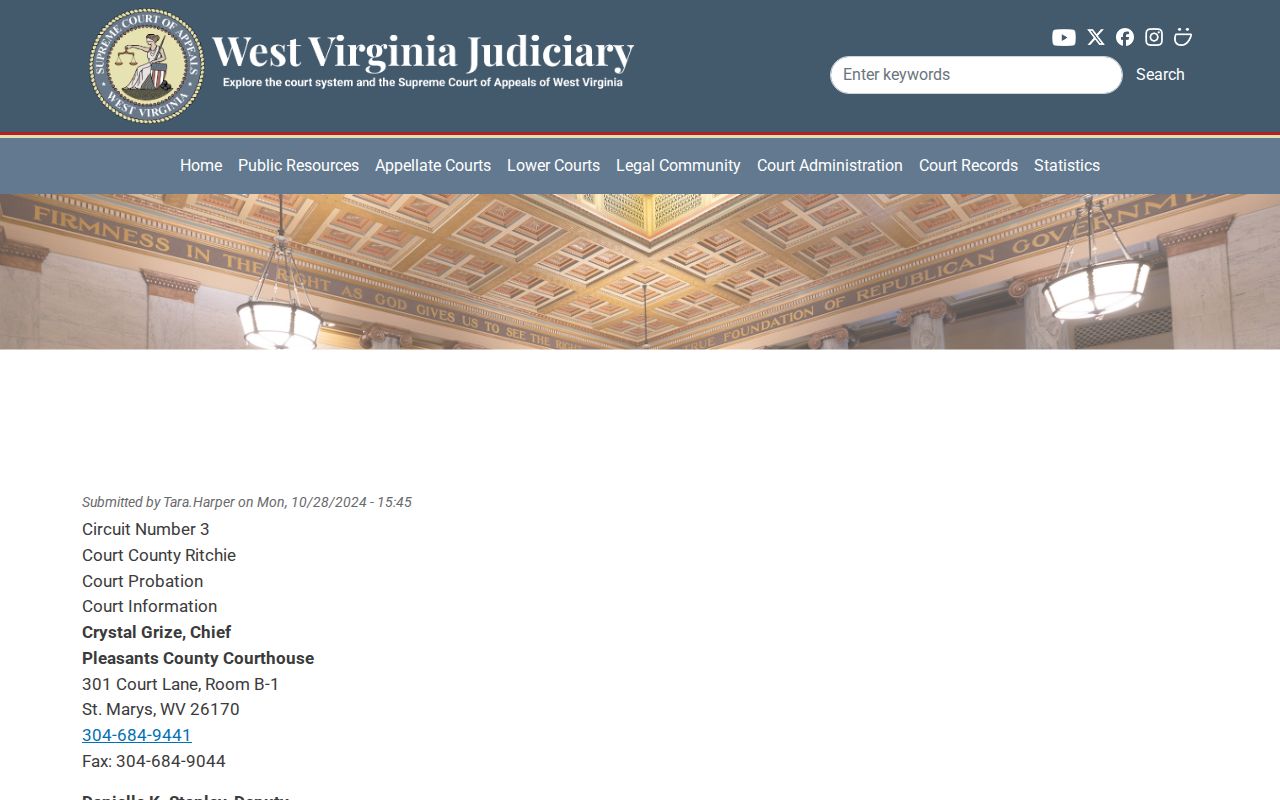
The image confirms that judicial probation contacts differ from the WVDCR office used for parole.
Ritchie County Supervision Conditions and Violations
Conditions come from the controlling order and the supervising agency. They can require regular reporting, compliance with the law, approved travel, treatment, or other case-specific conduct. A public summary should never replace the signed parole certificate, sentencing order, or instructions from the assigned officer. A person unsure about a condition should contact that officer or counsel before acting.
An alleged violation does not by itself establish the final result. For judicial probation, the Ritchie court record may contain a petition, hearing, modification, or revocation order. For parole, WVDCR reports alleged violations and the Parole Board handles the revocation process described by state law. A revocation can return a person to custody, while a modified condition may leave supervision in place.
VINELink can report a custody change if the person reenters a participating WVDCR system. It does not serve as a complete supervision ledger. The court, Board, or WVDCR record must establish whether supervision was continued, revoked, or discharged.
Ritchie County Parole Absconder Checks
WVDCR links Escapees and Absconders beside its standard offender tools. An absconder entry means the parole authority alleges that the person failed to report or comply and is being sought. It does not cancel the earlier release event. It also does not show successful completion of parole. The list is a current enforcement channel, not a historical release archive.
Check the statewide entry through the official WVDCR hub and compare identifiers carefully. No separate official Ritchie County absconder list was verified. Do not approach or try to apprehend a listed person. Information about a current location should be routed to law enforcement or the named supervising authority.
A violation does not always lead to the same outcome. The supervising officer may report alleged conduct, and the Board schedules a revocation hearing after receiving the required written report from Corrections. Revocation concerns someone already released on parole. It differs from a parole denial, which concerns a person still seeking release.
Ritchie County Supervision Crosses Counties
The Ritchie supervision map spans three counties. WVDCR parole is handled in Parkersburg in Wood County. The Third Circuit chief probation office is in St. Marys in Pleasants County, while a probation deputy works in Harrisville. North Central itself is in Doddridge County. None of those locations changes the Ritchie County origin of the case.
The Parkersburg Parole Office page identifies the WVDCR route for Ritchie County parole.
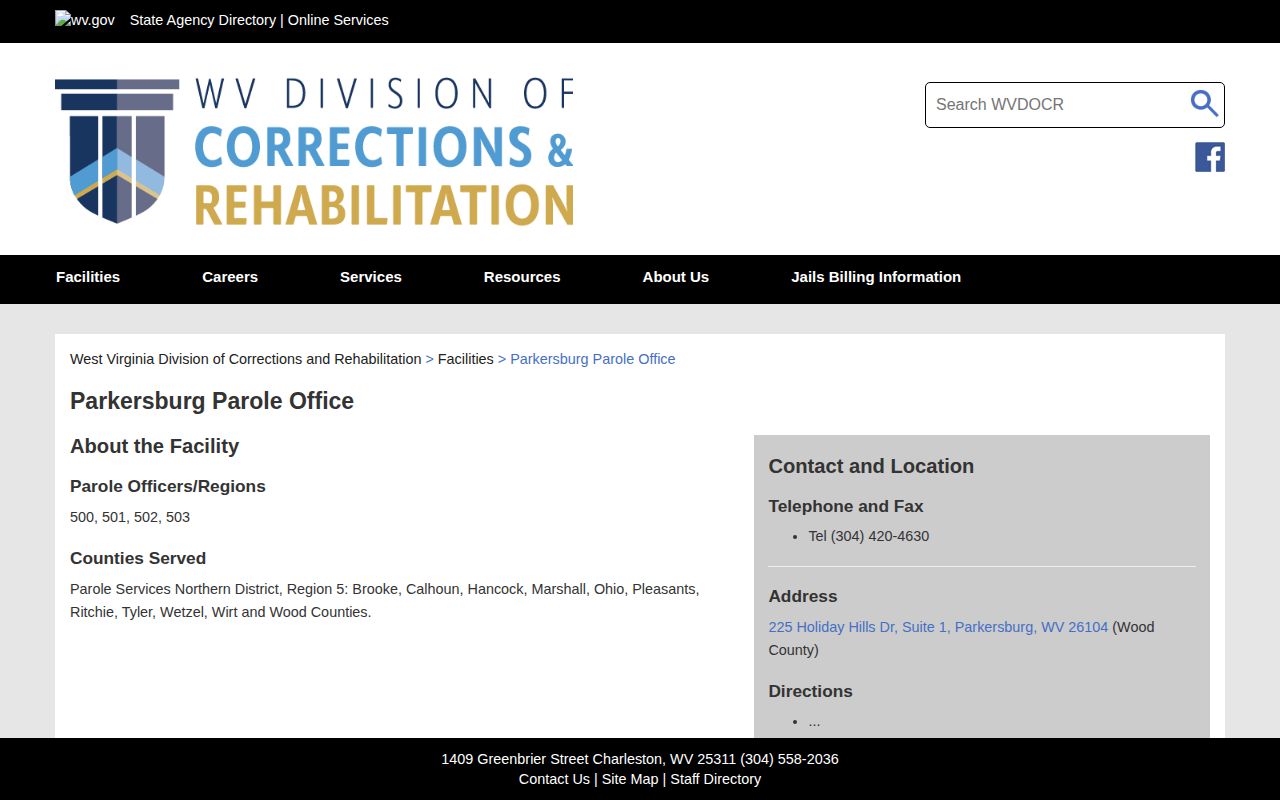
The office listing helps prevent a probation question from being sent to a parole officer, or the reverse.
Ritchie County Parole Hearing Records
Parole eligibility is not release. Under West Virginia Code §62-12-13, the Board schedules eligible inmates for consideration, but statutory time, institutional conduct, public-safety findings, and an approved release plan still matter. The Board publishes a monthly calendar, and its current site says interviews are conducted by video conference until further notice. North Central hearings occur by video.
A grant authorizes conditional release, yet processing can remain. A denial includes a reconsideration month and year. Further consideration means there is no final release authority, while rescission may withdraw a grant before release. No official public person-by-person decision search was found. Verify an outcome through OIS, the Board, VINE, or a focused records request.
West Virginia Parole Board
1409 Greenbrier Street, 2nd Floor
Charleston, WV 25311
304-558-6366
Written hearing statements fax: 304-558-5678
Ritchie County Supervision Discharge Records
Supervision ends through a formal agency or court event, not through the mere passage of a date shown online. For parole, ask WVDCR or the Parole Board for the current status and discharge record. For probation, use the sentencing court's completion, discharge, or revocation order. Mandatory supervision can also follow the prison portion of certain sentences, so release from incarceration may not end correctional authority.
Certain offenses can also carry a supervised-release term under West Virginia Code §62-12-26. That term is imposed by the sentencing court and is distinct from an ordinary assumption that every prison release becomes parole. The court order and WVDCR record should identify which form of authority applies.
A focused public-record request should identify the person, case or offender number if known, and the type of supervision. Ask for the public status and discharge date rather than private reporting details. West Virginia FOIA requires reasonable specificity and calls for a response as soon as practicable and within five business days, though a large production may take longer.
Keep the final discharge record. It can resolve a later conflict between an old offender-search entry and the current agency status. It also marks the true end of supervision more clearly than an estimated date or missed online result.
Note: A person missing from a supervision search may have discharged, transferred offices, or be affected by a data change.